Hello and welcome to the first edition of the Charran Medical newsletter!
Twice a month, I'll be sharing practical medical insights to help you better understand your health and make informed decisions about your care.
November is here, and the holiday season is just around the corner. Between work responsibilities, family commitments, and social gatherings, life can get hectic. And when our schedules get busy, sleep is often one of the first things we sacrifice.
But here's what I want you to remember: Sleep isn't a luxury. It's a fundamental part of your health.
Getting adequate, quality sleep supports your immune system, metabolism, cardiovascular health, and emotional well-being.
As we head into this busy season, I encourage you to make sleep a priority rather than something you squeeze in when everything else is done.
An Extra Hour of Sleep? Not Quite.
Daylight Saving Time ended yesterday, and while gaining an hour sounds wonderful, your body's internal clock doesn't automatically adjust when the clocks change.
Your circadian rhythm helps regulate when you feel awake, when you feel sleepy, and even when certain hormones are released.
The shift can temporarily affect your sleep, energy, and concentration.
Three things you can do this week:
-
Get morning sunlight. Natural light helps synchronize your internal clock with the new schedule.
-
Keep a consistent wake-up time. Your body responds well to regularity, even on weekends.
-
Dim the lights before bedtime. Bright light in the evening can delay your body's natural preparation for sleep.
Remember, good sleep isn't just about how many hours you spend in bed. It's also about timing, consistency, and quality.
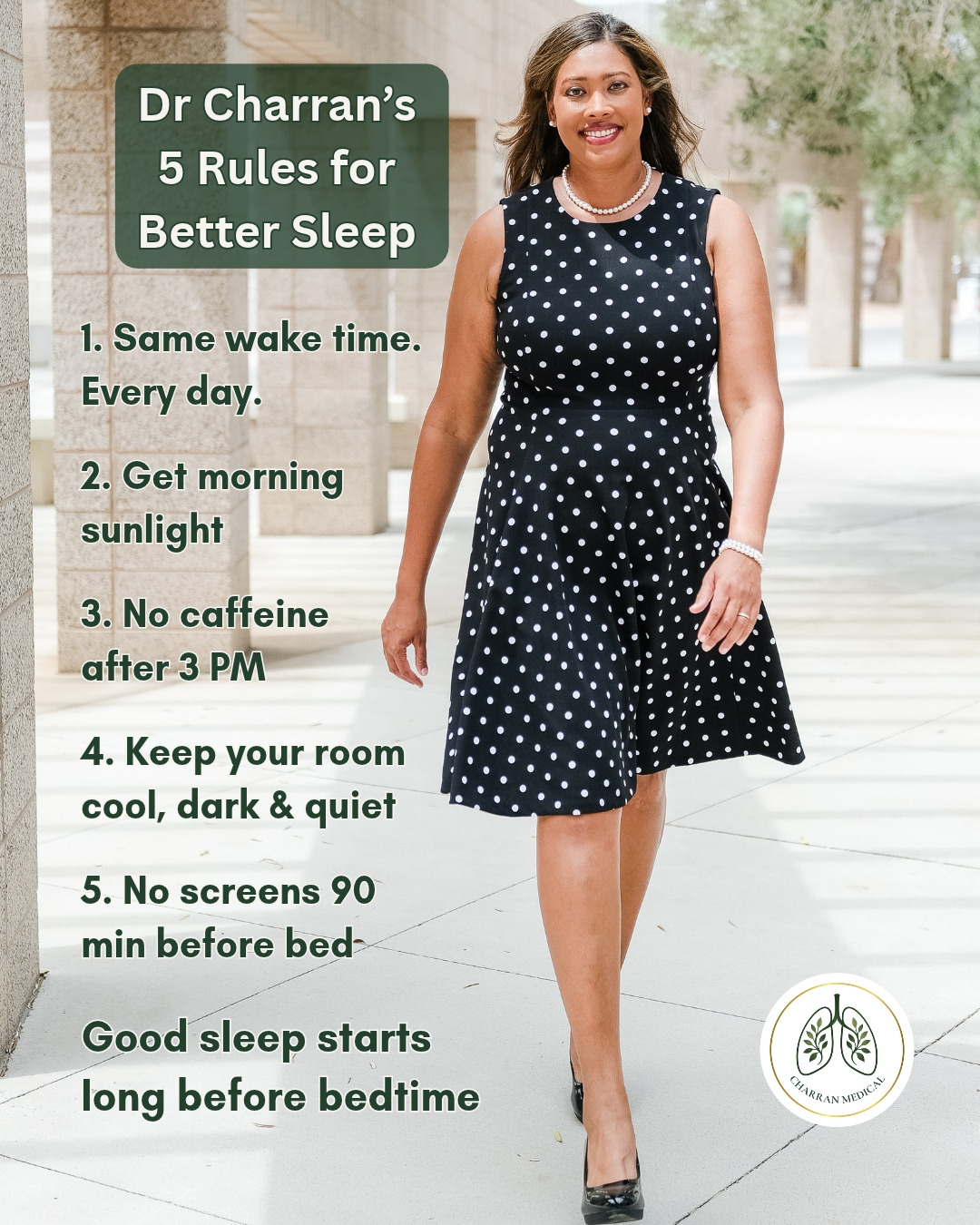
Coming in the Next Issue: A Free Sleep Guide!
Want to improve your sleep but aren't sure where to start?
In my next newsletter, I'll be sharing my Sleep Hygiene Guide, a free resource filled with practical, evidence-based strategies to help you build better sleep habits.
Consider it a little thank-you for being part of the Charran Medical community.
Stay subscribed so you don't miss it!
November Is Also Lung Cancer Awareness Month
While we're talking about taking care of our health this November, there's another important topic I want to highlight.
As a pulmonologist, lung health is especially close to my heart. November is Lung Cancer Awareness Month, and it's an opportunity to raise awareness about the importance of early detection.
Lung cancer remains one of the leading causes of cancer-related deaths, but early detection can make a meaningful difference.
Here's something I want everyone to understand: You don't have to smoke to develop lung cancer.
While smoking remains the leading risk factor, lung cancer can also develop in people who have never smoked. Other risk factors include secondhand smoke, radon exposure, air pollution, and certain occupational exposures. Sometimes, lung cancer develops without an identifiable risk factor.
That's why awareness matters. Lung cancer doesn't have one face or one story.
So, who should be screened?
Current screening recommendations focus on people at higher risk because of their age and smoking history. If you're between 50 and 80 years old, have at least a 20 pack-year smoking history, and currently smoke or quit within the past 15 years, you may qualify for annual low-dose CT screening. If you think you may qualify, speak with your doctor.
Screening is intended for people without symptoms. If you have a persistent cough, cough up blood, or experience unexplained weight loss or shortness of breath, those symptoms deserve medical evaluation regardless of your smoking history.
Want to Learn More About Lung Nodules?
Finding a lung nodule doesn't automatically mean cancer. I've created a free educational library with videos and resources to help you understand what lung nodules are, how they're evaluated, and what questions to ask.
Explore My Lung Nodule Education Center
A Small Favor
If you found this newsletter helpful, I'd love for you to share it with a friend or family member who might benefit. Good health information is worth sharing, and sometimes one small piece of knowledge can make a meaningful difference.
And if someone forwarded this to you, you can subscribe to receive future editions directly:
Subscribe to the Charran Medical Newsletter
Here's to making your health a priority, one informed decision at a time.

Dr. Ordessia Charran, MD, FCCP
Charran Medical
Medicine that actually makes sense.